
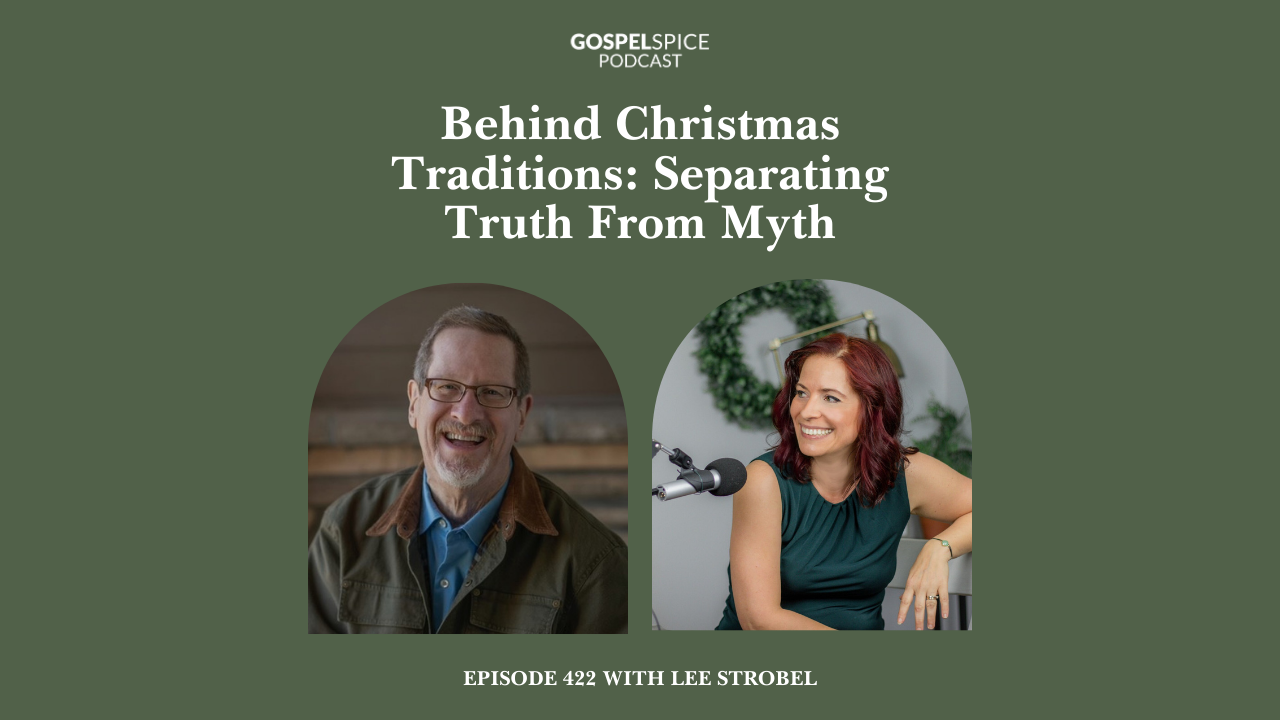
Behind Christmas traditions: Separating truth from myth | with Lee Strobel | Episode 422
Dec 16, 2025Stephanie hosts Lee Strobel, acclaimed author known for "The Case for Christ" and many other works examining the evidence for Christianity. Together they explore the true story of Christmas, the reality of miracles, and how the supernatural intersects with our everyday lives. This conversation challenges us to view Christmas with fresh eyes, to trust in God’s supernatural power, and to enter the season embracing generosity, hope, and an openness to miracles—both big and small.
Listen to the conversation here: https://www.podcastics.com/episode/393749/link/
Or, watch Stephanie and Lee on the Gospel Spice YouTube Channel (and please subscribe!): https://www.youtube.com/gospelspice
Understanding historical and cultural context enriches our appreciation for the Christmas story and corrects misconceptions shaped by tradition and mistranslation. So, Stephanie opens by asking Lee to unpack traditional nativity scenes. Strobel explains that the common image of Mary and Joseph being turned away by a harsh innkeeper actually stems from a mistranslation. The Greek word "kataluma" is better understood as "guest room" rather than an inn. In first-century Bethlehem, homes often had a main living area with adjacent space for animals, and wealthier homes included a guest room. Mary and Joseph most likely found shelter with relatives who didn’t have space in the guest room, so Jesus was born in the main family area, not in a crowded stable. Furthermore, Lee debunks the myth that Bethlehem was bustling with commercial inns; hospitality was so valued in that culture, it would be unthinkable to turn away a pregnant woman.
Miracles, by definition, are acts of God that transcend natural laws; if we accept the existence of a Creator, then miracles like the virgin birth become logically possible. So, Lee addresses common skepticism about the virgin birth, referencing Dr. William Lane Craig’s journey from doubt to faith. The miracle becomes scientifically plausible when recognizing that if God created the universe and set the laws of nature, creating a Y chromosome is a simple task for Him.
Our celebrations are opportunities to focus on generosity and the meaning of Christ’s birth rather than being distracted by debates about dates or traditions. In that way, the date of Christmas isn’t biblically mandated—early Christians didn’t record or celebrate birthdays. December 25th became tradition through a series of theological and historical developments, not pagan theft. Gift-giving echoes the generosity of figures like St. Nicholas, whose story shaped holiday customs such as stocking gifts.
Miracles still happen and can be examined with reason and evidence. Prayer remains a powerful connection to God’s supernatural work. Lee emphasizes medical documentation, credible witnesses, lack of natural explanation, and a context of prayer as strong criteria for validating miracles. Modern research, such as documented healing events in places like Mozambique and Brazil, shows that miracles often accompany breakthroughs of the gospel.
The Holy Spirit continues to work beyond cultural and political barriers, using dreams, visions, and supernatural encounters to reveal Jesus. Lee’s book "Seeing the Supernatural" and testimonies from the Middle East reveal how God uses dreams and visions to reach people, especially in closed countries. These experiences often have cross-verification and lead individuals into Christian community.
God’s promise is not a life free of suffering but a hope of ultimate healing and redemption, both now and in eternity. Stephanie and Lee close by reflecting on personal experiences with pain and loss. They discuss how suffering can lead to deeper faith, humility, and compassion, and how God redeems our pain according to Romans 8:28.
Catch up with Stephanie's latest episodes on the Gospel Spice podcast!
Stay connected + receive a free, tasteful gift in your inbox each month.
We hate SPAM. We will never sell your information, for any reason.